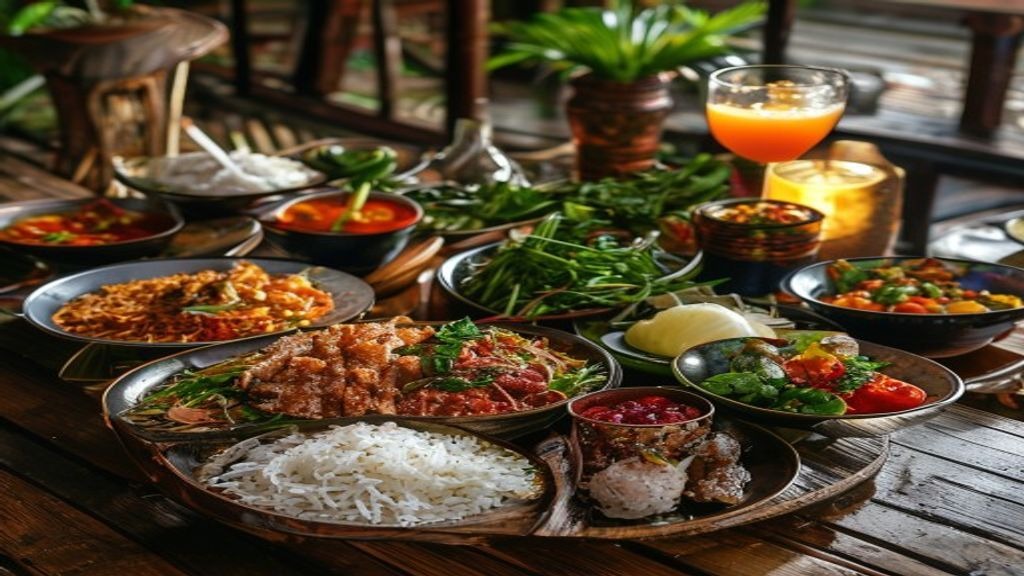
One of the best ways to understand Bali is to stop treating food as something that happens between activities.
Food is the activity.
Some of my favorite Bali moments have been simple ones: sitting in a small warung while the rain cooled the street outside, pointing at dishes in a glass case and hoping I chose well, tasting sambal that woke up the whole table, and realizing that the meal told me more about the island than another rushed viewpoint ever could.
Bali food can be comforting, spicy, smoky, fresh, sweet, and deeply local. It can also be confusing at first because tourist menus, Indonesian dishes, Balinese ceremonial food, beach cafes, night markets, and hotel breakfasts all sit side by side.
This guide will help you know what to try, where to start, and how to eat with curiosity instead of hesitation.
The Quick Answer
If it is your first time in Bali, start with:
- Nasi campur for a little bit of everything.
- Babi guling if you eat pork.
- Sate lilit for smoky minced satay.
- Lawar if you want something very Balinese.
- Bebek betutu or ayam betutu for slow-cooked spice.
- Nasi goreng or mie goreng for easy comfort food.
- Gado-gado for vegetables with peanut sauce.
- Fresh fruit and juices.
- Balinese coffee.
- A cooking class or market visit if food is a big part of your trip.
The best approach is simple: eat one easy familiar meal when you need comfort, then use the next meal to try something local.
Start With Nasi Campur
If you only try one dish early in the trip, make it nasi campur.
Nasi campur means mixed rice, and that is exactly why it is a perfect introduction. You usually get rice with several small sides: vegetables, chicken, tempeh, tofu, sambal, shredded coconut, egg, satay, or whatever the kitchen made that day.
It is not one flavor. It is a plate of little discoveries.
In a local warung, you may point to the sides you want from a display. In a more tourist-friendly restaurant, it may arrive as a fixed plate. Both can be good.
Traveler tip: if you are nervous about spice, ask for sambal on the side. Bali spice can be beautiful, but it does not always arrive politely.
Try Babi Guling If You Eat Pork
Babi guling is one of Bali’s most famous dishes: roasted suckling pig, often served with rice, lawar, sambal, crispy skin, and other sides. Indonesia Travel describes it as a must-try culinary experience for visitors to Bali.
It is rich, savory, spicy, and usually a daytime meal. Popular places can sell out, so lunch is often better than dinner.
Important note: babi guling is pork, so it is not halal. Bali has a Hindu-majority culture, unlike many other parts of Indonesia, but Muslim travelers and anyone avoiding pork should check carefully before ordering mixed plates, soups, broths, and satay.
If you do eat pork, this is one of the dishes that helps Bali feel distinct from the rest of Indonesia.
Sate Lilit: Small Skewers, Big Flavor
Sate lilit is different from the satay many travelers know.
Instead of chunks of meat on a skewer, minced meat or fish is mixed with spices and wrapped around a stick, often lemongrass or bamboo, then grilled. The result is smoky, fragrant, and easy to love.
You may find fish sate lilit near coastal areas or mixed into nasi campur plates. It is a good dish for travelers who want local flavor without jumping straight into the strongest spice levels.
Lawar: Very Local, Very Balinese
Lawar is a traditional mix often made with chopped vegetables, grated coconut, spices, and sometimes meat. There are different versions, and some can include blood or pork, so ask if you have dietary restrictions.
This is not always the easiest first dish for nervous eaters, but it is one of the foods that feels tied to Balinese ceremony and community.
Try it as part of a nasi campur or babi guling plate first. That way you can taste it without committing to a whole meal.
Betutu: Slow, Spiced, And Worth Looking For
Ayam betutu is spiced chicken, and bebek betutu is spiced duck. Traditionally, the meat is seasoned deeply and cooked slowly until tender.
This is a good dish when you want something more substantial than a quick cafe meal. It feels like the kind of food that asks you to sit down, slow down, and pay attention.
If you see it at a place known for it, order it. If it appears on a generic tourist menu with fifty unrelated dishes, manage expectations.
Easy Comfort Dishes: Nasi Goreng And Mie Goreng
Nasi goreng is fried rice. Mie goreng is fried noodles.
You will find them almost everywhere, from small warungs to hotels. They are not the most adventurous dishes, but they are useful comfort meals when you are tired, jet-lagged, or traveling with someone who needs a safe choice.
Add an egg, sambal on the side, and a fresh juice, and you have a simple meal that rarely disappoints.
Eat At Warungs, Not Only Pretty Cafes
Bali has beautiful cafes, especially in Canggu, Seminyak, Ubud, and Uluwatu. Enjoy them. There is nothing wrong with smoothie bowls, good coffee, and comfortable brunch after a beach morning.
But if you only eat in polished tourist cafes, you will miss the food that gives the island more character.
Warungs are small local eateries. Some are very simple, some are modern, and some are famous enough to have lines. They are often where you find better local dishes, better prices, and a more grounded feeling of place.
Look for:
- A steady flow of customers.
- Food that turns over quickly.
- Clear prices or friendly explanation.
- Hot food served hot.
- Locals eating there.
- A menu that does not try to be every cuisine at once.
You do not need to be fearless. Just curious.
Food Safety Without Losing The Fun
CDC food and water precautions for travelers are worth keeping in mind: eat food that is cooked and served hot, be careful with untreated water, and avoid ice unless you are reasonably sure it was made with safe water.
In practical Bali terms:
- Drink bottled or properly filtered water.
- Use safe water for brushing teeth if needed.
- Choose busy places with high turnover.
- Be careful with food sitting out too long.
- Peel fruit yourself when unsure.
- Start gently if your stomach is sensitive.
- Carry basic stomach medicine just in case.
This does not mean avoiding local food. It means choosing it thoughtfully.
Our travel safety guide covers broader health and safety planning.
Where To Eat In Bali By Area
Ubud
Ubud is a good place for Balinese food, cooking classes, markets, and slower meals. It is also a good base if you want to try babi guling, nasi campur, and traditional dishes between temple visits and rice terrace walks.
Use our Bali travel guide if you are still choosing where to stay.
Canggu
Canggu is strong for cafes, coffee, brunch, casual dinner, and international food. You can still find local warungs, but the area is also very shaped by remote workers and visitors.
Balance it: cafe in the morning, local meal at lunch.
Seminyak
Seminyak is better for polished restaurants, beach clubs, and nicer dinners. It is not the cheapest area, but it can be good for a first night when you want an easy landing.
Uluwatu
Uluwatu is more spread out, so plan meals around where you are staying or beach-hopping. Seafood, sunset dinners, and casual local spots can all work well here.
Denpasar
Denpasar is less polished for tourists, but that is part of the appeal if you want markets and local food. Go with patience, small cash, and curiosity.
How To Order With Less Awkwardness
You do not need perfect Indonesian to eat well, but a few words help:
- Terima kasih: thank you.
- Tidak pedas: not spicy.
- Sedikit pedas: a little spicy.
- Tanpa daging: without meat.
- Ayam: chicken.
- Ikan: fish.
- Babi: pork.
- Nasi: rice.
- Air: water.
Smile, point politely when needed, and ask simple questions. Most awkward food moments are solved by being patient and friendly.
A Simple Bali Food Day
Here is an easy food-focused day:
Morning
Start with Balinese coffee, fruit, and a simple breakfast. If you are in Ubud, add a market walk early.
Lunch
Try nasi campur or babi guling. Lunch is often the best time for local dishes because food is fresh and popular places are active.
Afternoon
Take a cooking class, visit a coffee stop, or try a local snack with tea.
Dinner
Keep it easy: grilled fish, sate lilit, ayam betutu, or a relaxed warung meal near where you are staying.
The goal is not to eat everything in one day. It is to let food shape the rhythm of the trip.
What To Avoid
Be careful with:
- Places where food looks like it has sat too long.
- Menus that are too huge and unfocused.
- Drinking tap water unless you know it is safe.
- Assuming every Indonesian dish in Bali is Balinese.
- Assuming all local food is halal.
- Ordering maximum spice on day one.
- Only eating in tourist cafes.
Useful Resources
FAQ
What food is Bali most famous for?
Babi guling is one of Bali’s most famous dishes, especially for travelers who eat pork. Nasi campur, sate lilit, lawar, and betutu are also excellent places to start.
Is Bali food very spicy?
Some dishes can be spicy, especially when sambal is involved. Ask for sambal on the side or say “tidak pedas” if you want less heat.
Can vegetarians eat well in Bali?
Yes, but ask carefully because sauces, broths, and mixed dishes may include meat or fish. Ubud and Canggu are especially easy for vegetarian and vegan options.
Is street food safe in Bali?
Many travelers enjoy Bali street food and warungs, but choose busy places with high turnover, eat food cooked and served hot, and be careful with water and ice.
Where should I take a Bali cooking class?
Ubud is a strong choice because many classes include market visits and focus on Balinese ingredients and spice pastes.
Final Thoughts
Eating in Bali is not about ticking off every famous dish.
It is about saying yes to the small moments: the smoky skewer, the sambal that makes you sit up straighter, the rice plate you did not fully understand but loved anyway, the warung owner who smiles when you ask what to try.
Start simple. Stay curious. Let food slow the trip down.
That is where Bali begins to taste like more than a destination.