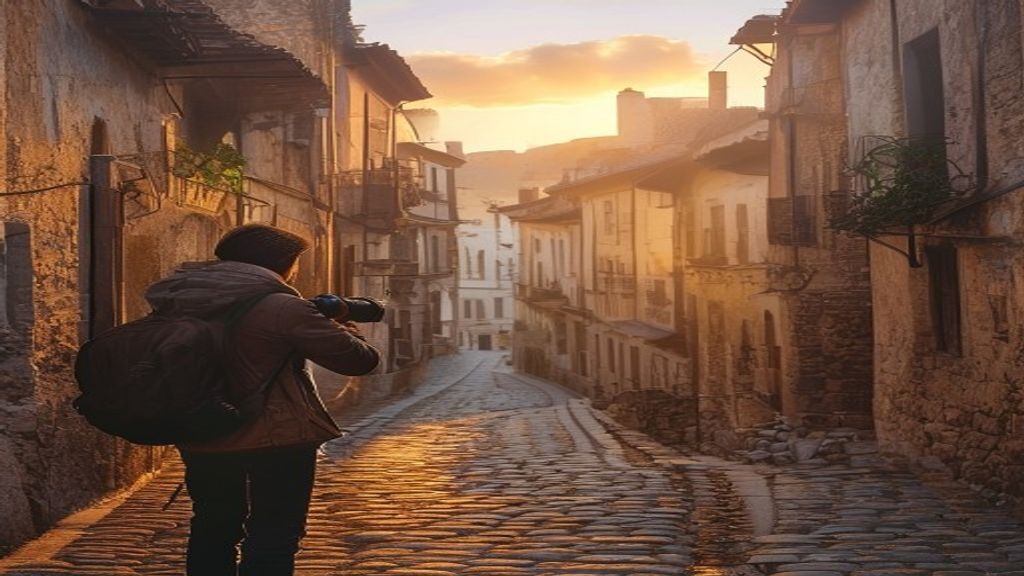
Travel photos are not just proof that you went somewhere. The best ones bring back a feeling: the warm light on a quiet street, the sound of a market waking up, the colour of the sea before sunset, the coffee you drank while everyone else rushed past.
You do not need to be a professional photographer to capture that. You also do not need the most expensive camera. What you need is a little patience, better timing, cleaner composition, and the habit of noticing what makes a place feel alive.
Most disappointing travel photos happen for the same reasons: harsh midday light, cluttered backgrounds, rushed framing, too much zoom, and taking the same photo everyone else takes without asking what story you want the image to tell.
This guide is for travellers who want better photos without turning the whole trip into a photoshoot. It works whether you use a phone, compact camera, mirrorless camera, or DSLR.
Quick Answer: How Do You Take Better Travel Photos?
Start with light, composition, and patience.
The fastest improvements are:
- Shoot early morning or late afternoon when the light is softer.
- Step closer instead of relying only on zoom.
- Keep backgrounds clean.
- Use leading lines like streets, bridges, paths, and railings.
- Include people, movement, food, signs, doors, markets, and small details.
- Take one wide shot, one medium shot, and one close-up of each scene.
- Edit lightly so the photo still feels natural.
- Put the camera away sometimes and enjoy the place.
Better travel photography is not about taking more photos. It is about seeing better before you press the button.
Start With The Feeling, Not The Landmark
The easiest travel photo is the famous landmark. The better photo is often the feeling around it.
Instead of only photographing the Eiffel Tower, look for the couple sharing breakfast nearby, the street musician, the reflection in a window, the bakery sign, or the first light hitting the rooftops. Instead of only shooting a beach, notice footprints, umbrellas, wet sand, fishermen, morning swimmers, or the colour shift before sunset.
Ask yourself: what will I want to remember about this place?
That question changes everything. You stop collecting random images and start building a visual story.
Use Light Like A Traveller, Not A Studio Photographer
Light matters more than gear.
The best travel light is usually:
- Early morning.
- Late afternoon.
- Golden hour before sunset.
- Blue hour after sunset.
- Soft cloudy light.
- Window light in cafes, trains, and hotel rooms.
Midday light can be harsh, especially in hot destinations. It creates hard shadows and washed-out skies. That does not mean you cannot shoot at noon, but you may need to change what you photograph.
At midday, look for:
- Markets under shade.
- Museum interiors.
- Food.
- Doorways.
- Patterns.
- Details.
- Reflections.
- People in shaded streets.
Do not force every photo to be a sweeping landscape. Some of the best travel images are small and quiet.
Build A Simple Shot List
A shot list helps you avoid coming home with 200 versions of the same view.
For each destination, try to capture:
- A wide establishing shot.
- A street or neighbourhood scene.
- A food or drink moment.
- A detail shot.
- A local transport photo.
- A people or movement shot.
- A landscape or skyline.
- A quiet personal moment.
- A sign, door, tile, texture, or colour detail.
- One photo that shows the weather or season.
This creates variety. Your final album will feel like a story instead of a postcard stack.
Composition Tips That Work Anywhere
Composition is how you organize the photo.
Use these simple habits:
- Keep the horizon straight.
- Watch the edges of the frame.
- Remove distracting objects when possible.
- Use symmetry for streets, doors, bridges, and interiors.
- Use leading lines to pull the eye into the scene.
- Put your subject slightly off-centre when it feels natural.
- Leave space in the direction someone is walking or looking.
- Get lower or higher instead of always shooting from eye level.
- Wait for one person to walk into the frame instead of twenty.
The biggest beginner mistake is taking the photo too quickly. Pause for three seconds. Look at the background. Move your feet. Then shoot.
Better Phone Travel Photography
Modern phones are excellent travel cameras. The trick is to use them intentionally.
Phone photo tips:
- Clean the lens before shooting.
- Tap to focus on your subject.
- Lower exposure slightly in bright scenes.
- Avoid heavy digital zoom.
- Use portrait mode carefully, not for everything.
- Turn on grid lines if they help composition.
- Shoot vertical for social media, horizontal for blog or website images.
- Use burst mode for movement.
- Keep your editing natural.
Phones are especially good for food, street details, quick portraits, interiors, and moments when pulling out a bigger camera would feel awkward.
Camera Gear: What You Actually Need
You do not need a huge camera bag for most trips. Heavy gear can make you tired and less spontaneous.
A simple travel photography setup could be:
- Phone with enough storage.
- Mirrorless or compact camera if you enjoy using one.
- One versatile lens.
- Extra battery.
- Memory cards.
- Small cleaning cloth.
- Lightweight strap.
- Portable charger.
If you are flying with camera gear, remember that lithium batteries and power banks should usually stay in accessible carry-on baggage. The FAA advises keeping devices with lithium batteries such as cameras and laptops in carry-on when possible, and spare batteries should be protected from damage and short circuits.
How To Photograph People Respectfully
People can make travel photos more powerful, but respect matters.
Good habits:
- Ask permission for close portraits.
- Smile and show the photo if appropriate.
- Do not photograph people in vulnerable situations.
- Be extra careful around children.
- Respect religious sites, ceremonies, and private moments.
- Follow signs where photography is not allowed.
- Buy something if you are photographing a small vendor’s stall closely.
Street scenes are part of travel, but people are not props. If a photo would make someone uncomfortable, skip it.
Food Photography While Travelling
Food photos are some of the easiest ways to remember a place.
To make them better:
- Sit near natural light when possible.
- Photograph the table before it gets messy.
- Include hands, cups, menus, or street context.
- Shoot from above for flat dishes.
- Shoot from the side for tall dishes, drinks, and desserts.
- Capture markets, cooks, signs, and ingredients too.
Do not let food photography ruin the meal. Take a few quick photos, then eat while it is still good.
Landscapes, Streets, And City Views
For landscapes:
- Add a foreground element like rocks, flowers, a path, or a person.
- Shoot during softer light.
- Keep the horizon straight.
- Show scale with a person, car, boat, or building.
For streets:
- Wait for movement.
- Use leading lines.
- Look for colour, signs, doorways, balconies, and shadows.
- Shoot the same street from different angles.
For city views:
- Go before sunset and stay until lights come on.
- Use railings, windows, or silhouettes for framing.
- Avoid only shooting the skyline; include the atmosphere around it.
Editing Without Making Photos Look Fake
Editing should help the photo feel like the memory, not turn it into something artificial.
Simple editing checklist:
- Straighten the horizon.
- Crop distractions.
- Adjust exposure.
- Add a little contrast.
- Correct white balance if colours look strange.
- Reduce highlights if the sky is too bright.
- Lift shadows carefully.
- Avoid extreme saturation.
- Keep skin tones natural.
Create a consistent look, but do not force every destination into the same colour mood. A misty mountain morning should not look like a tropical beach sunset.
Responsible Travel Photography
Travel photos can influence how other people treat places. Be thoughtful about what your images encourage.
Responsible habits:
- Stay on marked paths where required.
- Do not step into restricted areas for a photo.
- Respect wildlife distance.
- Avoid risky cliff-edge or train-track shots.
- Follow drone rules.
- Think carefully before geotagging fragile natural spots.
- Do not block local life for long photo sessions.
Leave No Trace principles are useful for outdoor photography because they focus on reducing impact and respecting places. A beautiful photo is not worth damaging the location.
Drone Photography While Travelling
Drones can create amazing travel images, but they come with rules.
Before flying:
- Check local drone laws.
- Check airspace restrictions.
- Avoid airports, crowds, and sensitive sites.
- Respect privacy.
- Carry required registration or training proof where applicable.
- Do not fly in national parks or protected areas unless explicitly allowed.
In the United States, the FAA says recreational drone flyers must take TRUST, and drones weighing 250 grams or more must be registered. Other countries have their own rules, so check before packing a drone.
If you are unsure, leave the drone grounded. It is better to miss a shot than risk fines, confiscation, or unsafe flying.
Common Travel Photography Mistakes
Avoid these:
- Taking every photo from standing eye level.
- Shooting only landmarks.
- Forgetting details and everyday scenes.
- Overediting skies and colours.
- Ignoring harsh light.
- Carrying too much gear.
- Not backing up photos.
- Photographing people without respect.
- Missing the moment because you are chasing the perfect shot.
- Never putting the camera away.
The last one matters. The point of travel photography is to remember the trip, not disappear behind the camera for the whole trip.
A Simple Photo Routine For Each Travel Day
Try this:
Morning:
- Shoot quiet streets, cafes, markets, and soft light.
Midday:
- Focus on interiors, food, details, shaded scenes, and museums.
Late afternoon:
- Photograph neighbourhoods, people moving through streets, and warm light.
Sunset:
- Choose one main viewpoint instead of rushing between several.
Evening:
- Capture lights, signs, restaurants, reflections, and atmosphere.
This rhythm helps you work with the day instead of fighting the light.
FAQ: Travel Photography
Do I need a professional camera for travel photography?
No. A phone is enough for many travellers. A dedicated camera gives more control, but better light, composition, timing, and storytelling matter more than expensive gear.
What is the best time of day for travel photos?
Early morning and late afternoon are usually best because the light is softer. Midday can still work for food, interiors, markets, details, and shaded streets.
How do I take better photos when travelling alone?
Use a small tripod where allowed, ask another traveller, use reflections, shoot environmental photos, or set the camera down safely with a timer. You do not need to appear in every image.
How should I back up travel photos?
Use at least two places if possible: phone or camera storage plus cloud backup, external drive, or laptop. For important trips, do not keep the only copy on one memory card.
Is drone photography allowed everywhere?
No. Drone rules vary by country, city, park, and airspace. Always check local rules before flying and avoid restricted or crowded areas.
Final Thoughts
Better travel photography starts with noticing. Notice the light, the quiet corners, the food before the first bite, the train window, the wet pavement, the market seller arranging fruit, the tired shoes after a long day, the moment when a city starts to feel familiar.
Those are the photos that bring a trip back.
Use your camera or phone with intention, but do not let it take over the whole experience. Take the photo, then look again with your eyes.
If you are planning your next trip, read Roamio’s travel planning guide, solo travel guide, and Europe travel guide for ideas on where and how to shoot.