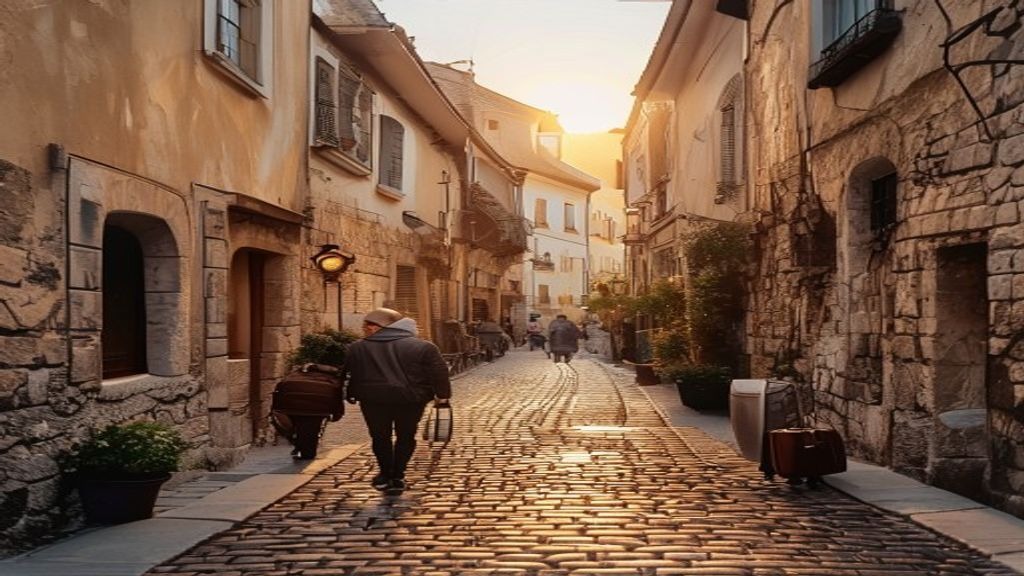
Planning a first trip to Europe is exciting, but it can also get overwhelming fast. One minute you are imagining coffee in Paris, trains through Switzerland, pasta in Rome, sunsets in Greece, and canals in Amsterdam. The next minute you have ten countries on a list, a confusing train map open, and no idea whether two weeks is enough.
Europe looks small on a map, but it does not feel small when you are trying to move through it with luggage, train reservations, museum tickets, hotel check-ins, and tired feet.
The best first Europe trip is not the one that squeezes in the most countries. It is the one that gives you enough time to feel each place. A good route has movement, but not constant movement. It gives you famous cities, slower moments, local food, beautiful streets, and enough breathing room that you do not spend the whole vacation in stations and airports.
This guide is written for first-time visitors who want Europe to feel magical, not exhausting. It covers where to go, how long to stay, how trains work, what to budget, when to visit, and the mistakes that make European trips harder than they need to be.
Quick Answer: The Best First Europe Trip
For a first Europe trip, choose 2-4 countries and stay at least 2-3 nights in each major city.
Good first-time Europe routes include:
- Paris, Amsterdam, and London.
- Rome, Florence, and Venice.
- Barcelona, Madrid, and Seville.
- Prague, Vienna, and Budapest.
- Munich, Salzburg, and Vienna.
- Paris, Lucerne, and Milan.
- Lisbon, Porto, and Madrid.
If you have only one week, choose one country or two close cities. If you have two weeks, choose three or four main stops. If you have three weeks, you can add variety without rushing.
Before You Plan: Europe Is Not One Trip
One of the biggest first-time mistakes is treating Europe like one destination. Europe is a continent with very different countries, languages, prices, climates, food cultures, and travel styles.
A trip through Italy feels different from a trip through Scandinavia. Spain is not paced like Switzerland. Greece in August is not the same travel experience as Germany in December.
Before choosing a route, decide what kind of Europe trip you want:
- Classic cities and museums.
- Food and wine.
- Beaches and islands.
- Mountains and scenery.
- Christmas markets.
- Train travel.
- History and architecture.
- Budget-friendly cities.
- Slow romantic trip.
- Family-friendly route.
Once you know the mood, the route becomes much easier.
How Many Countries Should You Visit?
The honest answer: fewer than you think.
For a first trip, I would usually plan:
- 7 days: 1 country or 2 nearby cities.
- 10 days: 2-3 cities.
- 14 days: 3-4 cities.
- 21 days: 4-6 cities, depending on distance.
The more you move, the more time you lose to packing, checking out, train stations, airport transfers, delays, and finding your way around again.
Europe rewards slower travel. Two full days in a city feels very different from arriving at night, rushing through one attraction, and leaving the next morning.
Best Europe Routes For First-Time Visitors
1. The Classic First Europe Route
Route: London, Paris, Amsterdam.
This is a great first route because the cities are famous, well connected, and easy to understand. You get museums, neighbourhood walks, canals, food, shopping, and iconic landmarks.
Best for: first-timers, couples, friends, and travellers who want big European city energy.
Suggested time: 10-12 days.
Tip: London is outside the Schengen Area, while France and the Netherlands are inside it. That matters if you are counting Schengen days.
2. The Italy First-Timer Route
Route: Rome, Florence, Venice.
Italy is one of the easiest countries to love on a first Europe trip. Rome gives you ancient history and busy piazzas, Florence gives you art and Tuscan beauty, and Venice gives you something completely different.
Best for: food, history, art, romance, and first-time Europe travellers who want a strong sense of place.
Suggested time: 9-12 days.
Tip: do not treat Venice as a rushed day trip if you can avoid it. It feels very different early in the morning and later at night.
3. The Central Europe Route
Route: Prague, Vienna, Budapest.
This route is beautiful, practical, and often better value than Western Europe. The cities are connected well, the architecture is dramatic, and the trip has a good mix of culture, cafes, music, river views, and history.
Best for: budget-conscious travellers, architecture lovers, and people who want a rich Europe trip without only choosing the most expensive cities.
Suggested time: 10-14 days.
Tip: this is one of the best train routes for first-timers because the cities line up naturally.
4. The Spain Route
Route: Barcelona, Madrid, Seville.
Spain is ideal if you want warm evenings, strong food culture, art, plazas, and a slower rhythm. Barcelona gives you coast and architecture, Madrid gives you museums and nightlife, and Seville gives you atmosphere.
Best for: food, art, warm weather, and travellers who like late dinners and lively streets.
Suggested time: 10-14 days.
Tip: Spanish meal times can be later than many visitors expect. Do not panic if restaurants feel quiet early.
5. The Scenic Train Route
Route: Paris, Lucerne, Interlaken, Milan.
This route mixes city and scenery. You get Paris, Swiss lakes and mountains, then northern Italy. It is more expensive than some routes, but the landscapes are memorable.
Best for: scenery, train lovers, couples, and travellers who want mountains without making the whole trip a hiking vacation.
Suggested time: 12-14 days.
Tip: Switzerland is beautiful but costly. Budget carefully and book early.
When Is The Best Time To Visit Europe?
The best time depends on your route, but for many first-time trips, shoulder season is ideal.
Spring: April to June.
- Comfortable weather.
- Flowers and longer days.
- Good for cities, countryside, and walking.
- Easter holidays can be busy in some places.
Summer: July to August.
- Long days and festivals.
- Best for beaches and mountains.
- Crowded and expensive in famous cities.
- Southern Europe can be very hot.
Autumn: September to October.
- Softer weather.
- Good food and wine season in many regions.
- Fewer crowds than summer.
- Great for cities and scenic routes.
Winter: November to March.
- Christmas markets in late November and December.
- Lower prices in some cities.
- Short days and colder weather.
- Best for museums, food, festive trips, and snow destinations.
If this is your first Europe trip and you are not tied to school holidays, I would look seriously at May, early June, September, or early October.
How To Travel Around Europe
Europe gives you several transport options, and the best one depends on distance.
Trains are excellent for:
- City-centre to city-centre routes.
- Short and medium distances.
- Scenic journeys.
- Routes like Paris-Amsterdam, Rome-Florence, Prague-Vienna, and Madrid-Seville.
Flights can make sense for:
- Long distances.
- Islands.
- Routes with poor train connections.
- Trips where time matters more than scenery.
Cars are useful for:
- Countryside trips.
- Small villages.
- Mountain areas.
- Road trips.
But cars are usually not ideal for big-city hopping because parking, traffic, tolls, and restricted zones can become stressful.
For non-European residents, Eurail can be useful for flexible multi-country train trips, but it is not always cheaper than buying point-to-point tickets. Compare both options before committing.
What About Schengen, Visas, And ETIAS?
Entry rules depend on your passport, so always check official sources before booking.
For many visa-exempt travellers, the Schengen Area allows short stays of up to 90 days within any 180-day period. This rule applies across the Schengen Area, not separately per country.
As of June 2026, the European Union says ETIAS is expected to start from the last quarter of 2026 for travellers from visa-exempt countries and territories. No action is required before the system begins, but this is something future travellers should check before departure.
Important: not every European country is in the Schengen Area. The United Kingdom and Ireland, for example, have separate entry rules.
How Much Does A Europe Trip Cost?
Europe can be budget-friendly or very expensive depending on where you go.
More expensive destinations often include:
- Switzerland.
- Norway.
- Iceland.
- Denmark.
- Major capitals in peak season.
Better-value destinations often include:
- Portugal.
- Spain outside peak areas.
- Poland.
- Hungary.
- Czechia.
- Parts of the Balkans.
Your biggest costs are usually accommodation, long-distance transport, and restaurants. Museums, local transport, bakeries, markets, parks, and walking routes can help balance the budget.
A realistic first-time Europe budget should include:
- Flights.
- Accommodation.
- Intercity trains or flights.
- Local transport.
- Food and coffee.
- Attractions and tours.
- Travel insurance.
- City taxes where applicable.
- Emergency buffer.
Do not build a budget only around the cheapest possible version. Build one around the trip you will actually enjoy.
Where To Stay In Europe
For a first visit, location matters more than hotel luxury.
Look for accommodation:
- Near public transport.
- In a safe and active neighbourhood.
- Within easy reach of your main sightseeing area.
- With recent reviews.
- With air conditioning if travelling in summer, especially in Southern Europe.
- With lift access if you have heavy luggage.
Historic European buildings can be charming, but not all have elevators, strong air conditioning, large rooms, or modern soundproofing. Read reviews carefully.
Common First Europe Trip Mistakes
Avoid these:
- Visiting too many countries too quickly.
- Booking cheap flights without checking airport distance.
- Forgetting that train stations are often easier than airports for city-to-city travel.
- Not reserving popular museums or attractions.
- Assuming every hotel has air conditioning.
- Packing too much luggage.
- Forgetting rest days.
- Eating only near major landmarks.
- Ignoring local holidays and closing days.
- Misunderstanding the Schengen 90/180 rule.
The biggest mistake is rushing. Europe is more enjoyable when you leave space for wandering, sitting, eating, and changing your mind.
A Simple 14-Day Europe Itinerary
Here is a balanced first-time route:
Days 1-4: Paris.
- Classic landmarks.
- Museums.
- Neighbourhood walks.
- Cafes and bakeries.
Days 5-7: Amsterdam.
- Canals.
- Museums.
- Bike-friendly neighbourhoods.
- Easy day trip if you want one.
Days 8-10: Munich or Lucerne.
- Choose Munich for beer halls, history, and easy day trips.
- Choose Lucerne for Swiss scenery and lake views.
Days 11-14: Milan, Florence, or Rome.
- Choose Milan for fashion, design, and northern Italy.
- Choose Florence for art and Tuscany.
- Choose Rome for ancient history and a big finish.
This is still a busy trip, but it has a clear flow and avoids trying to see ten countries in two weeks.
What I Would Do Differently On A First Europe Trip
If I were planning a first Europe trip from scratch, I would:
- Choose fewer cities.
- Stay more nights in each place.
- Book central accommodation.
- Use trains where they make sense.
- Reserve only the must-do attractions.
- Leave free evenings.
- Pack lighter.
- Eat farther from the main squares.
- Build the route around what I actually enjoy, not what everyone says I must see.
That last point matters. Your Europe trip does not need to look like anyone else’s.
FAQ: Europe Travel
How many days do you need for a first Europe trip?
Ten to fourteen days is a strong first trip length. One week can work if you focus on one country or two close cities. Three weeks gives you more variety without rushing.
Is train travel better than flying in Europe?
For many city-to-city routes, trains are easier because they connect central areas and avoid airport transfers. For long distances or islands, flights may be faster.
Is Europe expensive?
Some parts are expensive, especially Switzerland, Scandinavia, Iceland, and famous capitals in peak season. Portugal, Spain, Central Europe, and parts of Eastern and Southeastern Europe can be better value.
What is the best month to visit Europe?
May, early June, September, and early October are often excellent for first-time trips because the weather is usually pleasant and crowds are lower than peak summer.
Can I visit multiple European countries in one trip?
Yes, but keep the route realistic. Choose countries that connect naturally and avoid spending too much of the trip in transit.
Final Thoughts
Europe is at its best when you give it time. The famous landmarks are part of the magic, but so are the slow breakfasts, train rides, quiet streets, local markets, and small moments between plans.
For a first trip, do not try to conquer the continent. Choose a route that makes sense, stay longer than one night whenever possible, and build your days around neighbourhoods instead of checklists.
If you plan it well, your first Europe trip will not feel like a blur of stations and suitcase wheels. It will feel like a collection of places you actually had time to enjoy.
Still building your travel confidence? Start with Roamio’s travel planning guide and solo travel guide before finalizing your route.