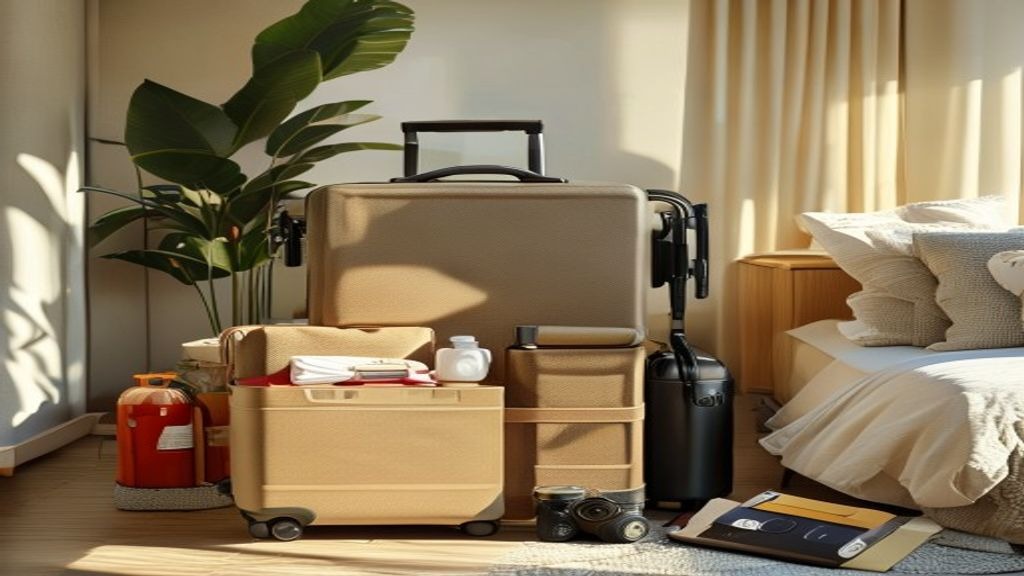
I used to pack like I was preparing for every possible version of myself.
The beach version. The fancy dinner version. The “maybe I will suddenly go hiking” version. The cold-weather version, even when the forecast looked warm. By the time I zipped the bag, I had packed for five imaginary trips and made the real one harder.
Then travel taught me the obvious lesson: you do not enjoy the things you overpack. You carry them.
Packing light is not about owning the smallest backpack or wearing the same outfit in every photo. It is about making the trip easier. Less waiting. Less dragging. Less unpacking. Less worrying about lost bags. More energy for the actual destination.
The Quick Packing Rule
Pack for the trip you are actually taking, not the trip you might theoretically take.
Before adding anything, ask:
- Will I definitely use this?
- Can it work with more than one outfit?
- Can I buy, borrow, or do laundry if I really need it?
- Is this item worth carrying through airports, stairs, taxis, and hotel rooms?
If the answer is no, leave it.
Start With The Trip Shape
Packing should follow the rhythm of your trip.
A city weekend, beach holiday, business trip, family vacation, road trip, hiking trip, and long-term backpacking route all need different bags. The mistake is using one generic packing list for every journey.
Before packing, write down:
- Destination and weather.
- Number of days.
- Laundry access.
- Main activities.
- Dress expectations.
- Transport style.
- Bag limits.
- Whether you will move hotels often.
If you are changing accommodation every few days, pack lighter than you think. If you are staying in one place for a week with laundry, you can still pack light because you are not moving constantly.
For planning the overall trip flow, use our travel planning guide.
Choose The Right Bag First
The bag decides how disciplined you will be.
If you choose a huge suitcase, you will probably fill it. If you choose a reasonable carry-on, every item has to earn its space.
For most trips, I like:
- Carry-on suitcase for city trips, hotels, and easy transport.
- Travel backpack for stairs, trains, guesthouses, and rougher streets.
- Small personal item for documents, electronics, medicine, and one emergency layer.
- Day bag for walking around after arrival.
Check airline size and weight rules before packing. Some airlines care more about weight than dimensions, especially on regional routes.
Build A Simple Clothing System
Clothes are where most people overpack.
The easiest method is to pack outfits that share a color palette. You do not need a fashion spreadsheet. Just choose tops and bottoms that mostly work together.
For a one-week trip, a practical base can be:
- 4 to 5 tops.
- 2 to 3 bottoms.
- 1 warmer layer.
- 1 light rain layer if needed.
- 1 nicer outfit if the trip calls for it.
- Underwear and socks for the days between laundry.
- Sleepwear.
- Swimwear or activity-specific clothing if needed.
The key is repeatability. If a shirt only works with one pair of trousers, it is less useful. If a jacket works on the plane, at dinner, and on a cool morning walk, it earns its place.
Use The Three-Shoe Rule
Shoes eat space quickly.
For most trips, three pairs is the maximum:
- Comfortable walking shoes.
- Sandals, flats, or casual shoes depending on climate.
- One activity or nicer pair only if truly needed.
Often, two pairs are enough.
Wear the bulkiest pair while traveling. Pack shoes in a bag or shower cap so they do not touch clean clothes.
Pack For Laundry, Not For Every Day
If your trip is longer than a week, laundry is usually easier than carrying two weeks of clothes.
Laundry options:
- Hotel laundry for convenience.
- Local laundromats for longer trips.
- Apartment washing machine.
- Sink wash for small items.
- Quick-dry clothing if moving often.
Bring a small laundry bag. Dirty clothes loose in a suitcase make everything feel chaotic.
For budget trips, laundry is one of the easiest ways to reduce baggage fees and stress. Our budget travel guide has more ways to save without making the trip feel cheap.
Toiletries: Smaller Than You Think
Toiletries are another overpacking trap.
TSA’s 3-1-1 liquids rule says carry-on liquids, gels, and aerosols must be in travel-size containers of 3.4 ounces or 100 milliliters or less, placed in one quart-size bag, with one bag per passenger.
Even outside the United States, similar cabin liquid rules are common, so smaller toiletries are usually safer for carry-on travel.
Pack:
- Toothbrush and toothpaste.
- Deodorant.
- Sunscreen.
- Basic skincare.
- Razor if needed.
- Hair product only if you truly use it.
- Small soap or body wash.
- Any personal essentials.
Avoid packing full-size products “just in case.” Hotels, pharmacies, and supermarkets exist in most destinations.
Medicines And Health Items
CDC Travelers’ Health recommends preparing medicines carefully before travel, especially prescriptions. Keep essential medicine in your carry-on, not checked luggage.
Pack:
- Prescription medicine in original packaging when possible.
- A copy of prescriptions.
- Basic pain relief.
- Allergy medicine if needed.
- Motion sickness tablets if relevant.
- Stomach medicine.
- Bandages or blister care.
- Hand sanitizer.
- Any destination-specific medicine recommended by a clinician.
Check whether your medicine is legal at your destination. Some common medicines are restricted in certain countries.
This connects directly with our travel safety guide, especially for documents, insurance, and emergency planning.
Electronics: Bring Less, Charge Better
Electronics can quietly take over your bag.
Pack only what supports the trip:
- Phone.
- Charger.
- Power bank.
- Universal adapter if needed.
- E-reader or tablet if you use it.
- Camera only if you will actually carry it.
- Headphones.
- Small cable organizer.
FAA PackSafe guidance is important for batteries: spare lithium batteries and power banks should generally go in carry-on baggage, not checked baggage. Check airline and FAA rules for size limits before flying with larger batteries.
For photography-focused trips, our travel photography guide can help you decide what gear is worth carrying.
Documents And Money
Your document setup should be simple and redundant.
Carry:
- Passport or ID.
- Visa or entry approval if needed.
- Travel insurance details.
- Booking confirmations.
- Emergency contacts.
- Driver’s license or international permit if driving.
- One main card.
- One backup card stored separately.
- Some cash if the destination needs it.
Save digital copies offline and in a secure cloud folder. If your phone disappears, you should still be able to recover the important details.
The Personal Item Is Your Safety Net
Your personal item should carry anything you cannot afford to lose or wait for.
Put these in your personal item:
- Passport and documents.
- Wallet.
- Phone and charger.
- Medicine.
- Glasses or contacts.
- One change of underwear.
- Basic toiletries.
- Valuable electronics.
- A warm layer for the plane.
- Snacks.
If your checked bag is delayed, you can still function for a day.
Packing Cubes: Useful, Not Magic
Packing cubes do not reduce the weight of your bag, but they do reduce chaos.
Use them for:
- Tops.
- Bottoms.
- Underwear and socks.
- Laundry.
- Family members’ clothes.
- Activity-specific items.
The mistake is stuffing cubes until they become bricks. The goal is organization, not compression at any cost.
What I Always Pack
My personal essentials are:
- Comfortable walking shoes.
- Light layer.
- Small first aid pouch.
- Power bank.
- Reusable water bottle where practical.
- Tote bag.
- Laundry bag.
- Compact umbrella or rain shell if forecast suggests it.
- A few snacks.
- Offline maps.
- One outfit that makes me feel good.
That last one matters. Packing light should not mean packing only boring survival clothes. Bring something you enjoy wearing.
What I Almost Never Pack
These are common bag-fillers:
- Full-size toiletries.
- Too many shoes.
- Clothes for imaginary events.
- Heavy books.
- Excess camera gear.
- Backup outfits for every mood.
- Bulky towels unless the trip requires one.
- Items you can easily buy at the destination.
- “Just in case” gadgets.
If you have not used something on the last three trips, question it hard.
Packing For A Beach Trip
Beach trips are easy to overpack because everything feels light individually.
Focus on:
- Swimwear.
- Cover-up or light shirt.
- Sandals.
- Sunscreen.
- Hat.
- Sunglasses.
- Light evening outfit.
- Reusable water bottle.
- Dry bag or simple plastic-free wet bag.
Do not bring too many outfits. Beach days are repetitive in the best way.
Packing For A City Trip
City trips require comfortable shoes and flexible layers.
Pack:
- Walkable shoes.
- Clothes that work from daytime exploring to casual dinner.
- Small day bag.
- Rain layer if needed.
- Phone charger or power bank.
- Outfit for one nicer meal if relevant.
Location matters more than having many outfit choices. Our where to stay travel guide helps choose a base that reduces daily friction.
Packing For Family Travel
Family packing needs structure, not endless extras.
Use separate packing cubes or bags by person, and keep the first-night essentials easy to reach.
Bring:
- Medicines.
- Comfort item for children.
- Snacks.
- Change of clothes in the personal item.
- Simple entertainment.
- Chargers.
- Copies of important documents.
- Laundry bags.
Do not pack every possible toy. Trips are already stimulating. A few reliable items are better than a suitcase full of options.
Our family travel guide has more planning tips for realistic family pacing.
Packing For Solo Travel
Solo travelers should pack for independence.
That means:
- You can carry your own bag comfortably.
- You can keep documents secure.
- You have backup money.
- You have offline maps.
- You have a reliable phone battery.
- Your clothes fit the local environment.
The lighter your bag, the easier it is to move confidently through stations, stairs, sidewalks, and unfamiliar check-ins.
Our solo travel guide pairs well with this.
The Night-Before Packing Check
Before closing the bag, do this:
- Remove three things.
- Check the weather again.
- Check airline baggage rules.
- Put medicine and documents in your personal item.
- Charge devices.
- Download offline maps.
- Weigh the bag if flying with strict limits.
- Confirm you can lift and carry it comfortably.
If you cannot carry your own bag for ten minutes without feeling annoyed, it is too heavy.
Useful Resources
- TSA 3-1-1 Liquids Rule
- TSA What Can I Bring?
- FAA PackSafe: Lithium Batteries
- CDC Travelers’ Health: Travel Health Kits
FAQ
How do I pack light for a week?
Pack clothes that mix and match, limit shoes to two or three pairs, choose small toiletries, plan for laundry, and avoid packing for imaginary situations.
Is carry-on only worth it?
Carry-on only is worth it for many city trips, short trips, and routes with lots of movement. It saves baggage fees, waiting time, and lost-luggage stress, but it may not fit every family, winter, or gear-heavy trip.
What should always go in my personal item?
Keep passport or ID, wallet, phone, charger, medicine, valuables, glasses, travel documents, and one small emergency clothing item in your personal item.
Can I pack power banks in checked luggage?
Spare lithium batteries and power banks generally belong in carry-on baggage, not checked baggage. Check FAA and airline rules, especially for larger batteries.
What is the biggest packing mistake?
Packing for unlikely scenarios instead of the real itinerary. Most overpacking comes from fear, not need.
Final Thoughts
Packing light is not about having less for the sake of it.
It is about giving yourself an easier trip. A bag you can lift. Clothes you actually wear. Essentials you can find quickly. Fewer things to lose. Less time waiting, unpacking, and repacking.
When your bag feels simple, the trip feels lighter too.